
Yakwetu Super App
Role
Personas, Information Architecture, Sitemaps, User Journey, Paper Wireframes, Competitive Audit, High and Low Fidelity wireframes.
The Yakwetu Super App is a groundbreaking platform that brings together the diverse world of African entertainment, including movies, series, podcasts, music, audiobooks, VR experiences, and games, under a single, seamless interface. Designed to cater to the needs of both content creators and enthusiasts, Yakwetu aims to elevate and celebrate the richness of African culture and storytelling.
Duration
2 months(Sept 2024 -Oct 2024)
Team Size
2 members
Tools
Figma, Relume
Role
Personas, Information Architecture, Sitemaps, User Journey, Paper Wireframes, Competitive Audit, High and Low Fidelity wireframes.
Duration
2 months(Sept 2024 -Oct 2024)
Tools
Figma, Relume
Team Size
2 members
The Yakwetu Super App is a groundbreaking platform that brings together the diverse world of African entertainment, including movies, series, podcasts, music, audiobooks, VR experiences, and games, under a single, seamless interface. Designed to cater to the needs of both content creators and enthusiasts, Yakwetu aims to elevate and celebrate the richness of African culture and storytelling.
🚀 The Challenge
How do you fit 7 distinct products into 1 app while ensuring users don't feel overwhelmed?
When the management presented the idea of a Super App for African entertainment—integrating movies, series, podcasts, music, audiobooks, VR, and games—I knew this was no ordinary design project. It was an opportunity to:
1. Create a seamless user experience for a diverse audience.
2.Empower 475+ million African smartphone users with pay-as-you-go content.
3.Ensure African creators get fairly compensated.
As a recent Google UX graduate, I was eager to put my skills to the test. The challenge was clear:
"Design seven unique products, unify them under one app, and make the experience unforgettable."
Cue the planning montage. 🎬👇

🧩 The Process: Design Thinking at Work
I joined a two-person team to tackle this monumental task. Using the design thinking framework, we broke down the challenge into manageable steps.
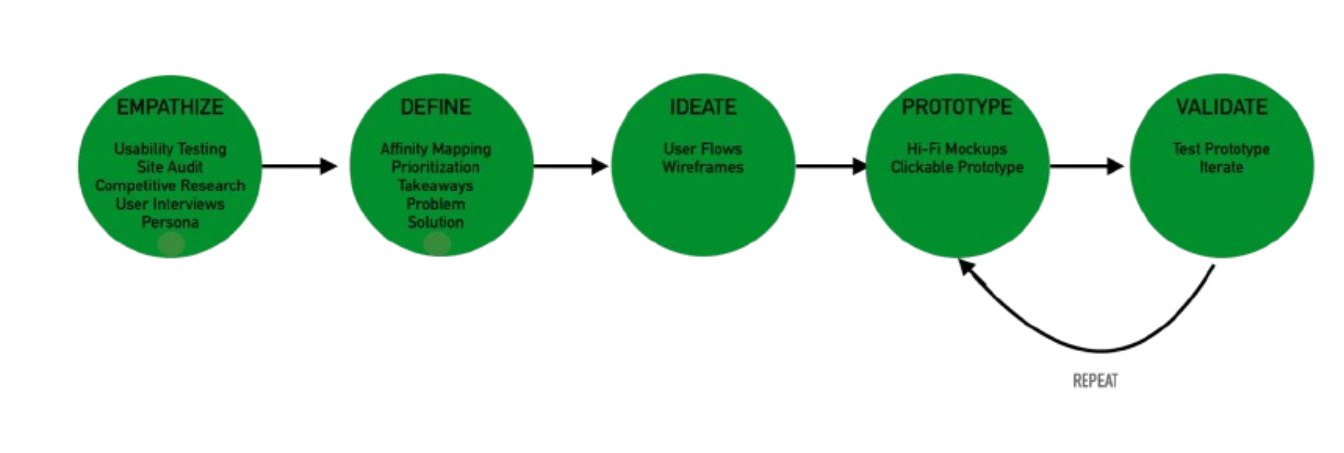
1️⃣ Empathize: Walking in Users’ Shoes
To better understand the pain points and desires of our target audience, Evans and I conducted in-depth user research, leveraging a multi-pronged approach:
Listening to the Users Who Matter Most
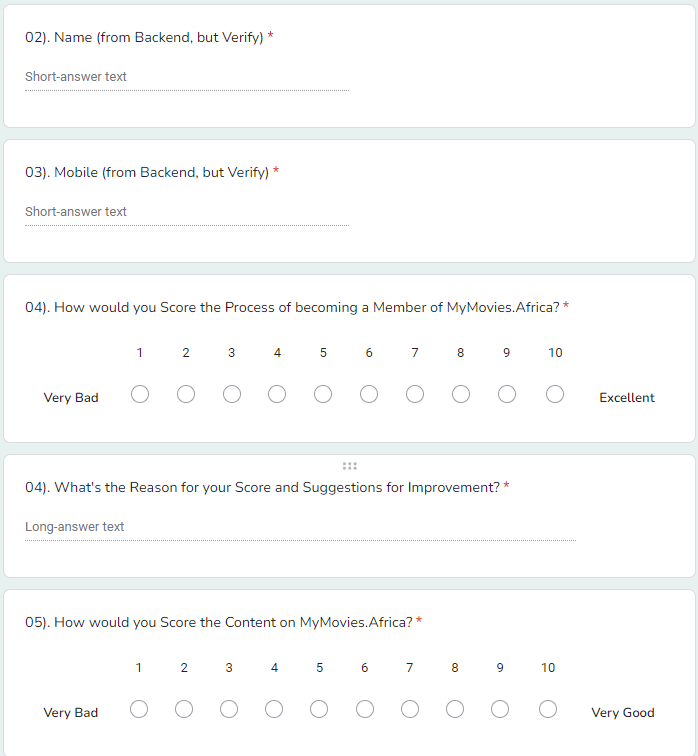
To design a unified experience that resonates with our diverse audience, we began by looking closely at the behaviors, needs, and pain points of MyMovies.Africa’s most engaged customers. We collaborated with the data team to analyze responses from a recent survey of our 100 best customers. We were able to talk to 46 people on the phone. These power users offered invaluable insights into their preferences and consumption habits, forming the foundation of the Yakwetu Super App's design strategy.

Competitive Landscape Evaluation
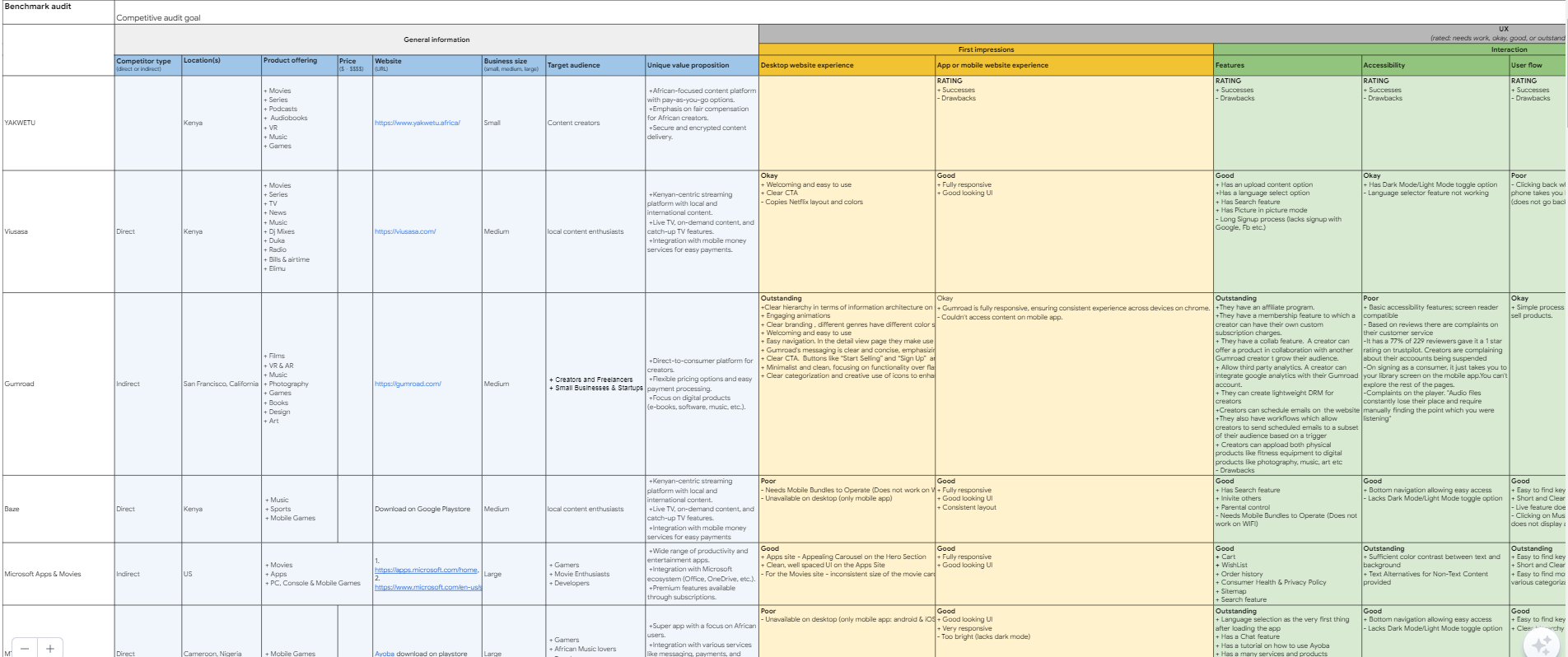
To identify key gaps and opportunities in the market, we conducted a thorough analysis of existing African entertainment platforms. Since it's a super app, we included apps that had multiple offering like Gumroad, Patreon and Microsoft Apps & Movies. We did both a direct and indirect competitor analysis, focusing on user experience, features, content offerings, and monetization strategies.

Checking out our competitors.
Our direct competitors included Viusasa and Baze. By examining their feature sets, user experiences, strengths, weaknesses, market gaps and overall positioning, we were able to define the unique value proposition that Yakwetu could offer to stand out from the competition.
Here's a link to the competitive analysis table and the competitive audit..
User Personas
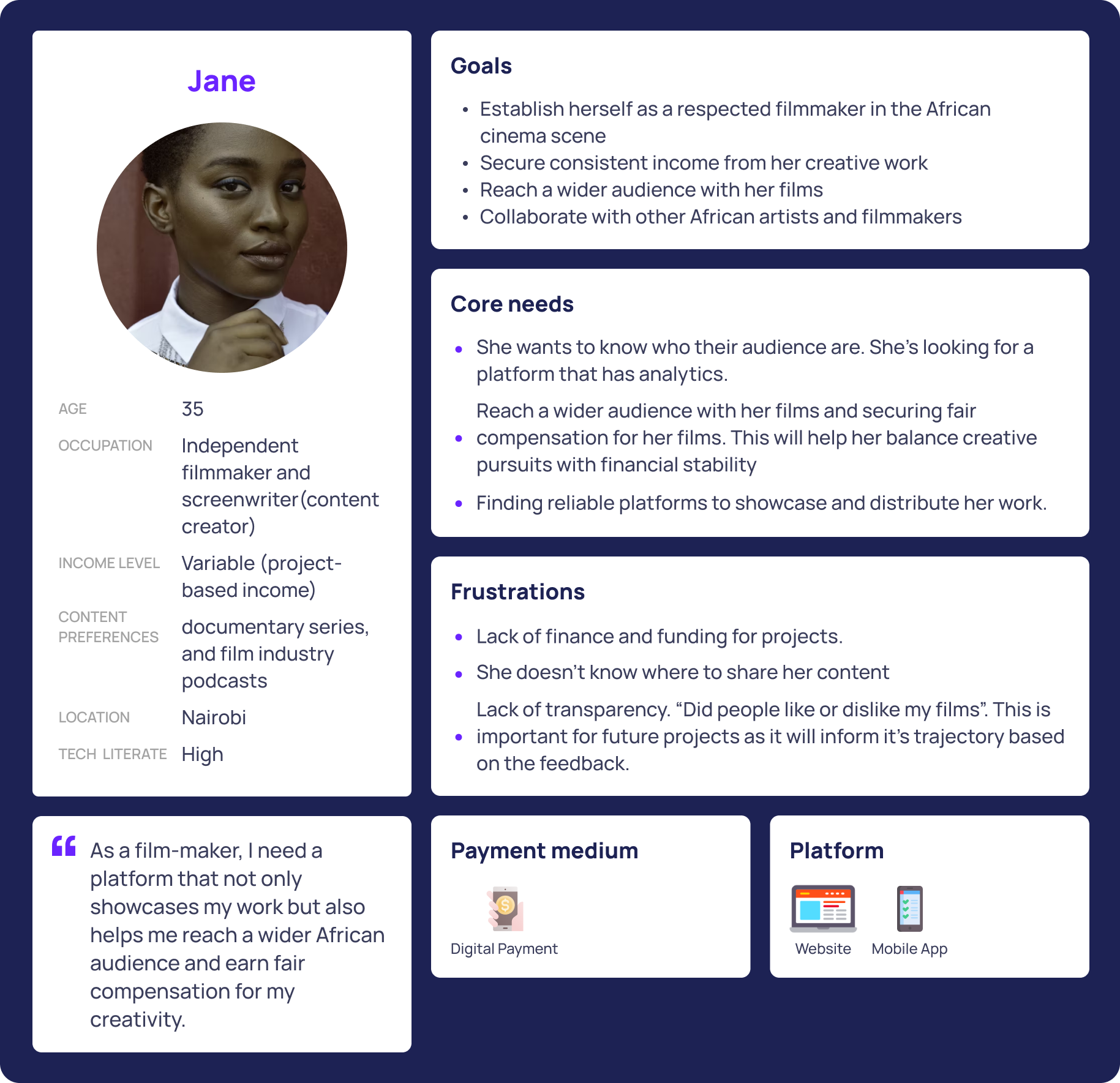
Synthesizing the insights gathered from our user research, we developed a set of detailed personas that would guide the design and development of the Yakwetu Super App. These archetypes, such as "Jane, the Independent Auteur" and "John, the Tech Savvy Student," became the North Star for our team, ensuring that every aspect of the app was tailored to the real needs and desires of our target audience.
.png)
.png)
.png)
2️⃣ Define: Framing the Problem
We crafted the problem statement to guide our approach:"How might we design a platform that brings seven distinct entertainment products together, enabling smooth navigation while maximizing creator and user satisfaction?"Key goals:
✅ Seamless content discovery.
✅ Unified navigation for seven products.
✅ Intuitive interfaces for different media types.
It was time to get brainstorm ideas.

Evan's and I brainstorming ideas
3️⃣ Ideate: Generating Solutions
The ideate phase brought the vision for the Yakwetu Super App to life. Collaborating with Evans, we embraced a "How Might We" brainstorming approach to explore design possibilities that addressed user pain points and elevated their content discovery journey. Together, we bounced ideas off each other to refine key areas such as the navigation, the explore page and the home page:
Navigation: How might we ensure users can seamlessly explore diverse content categories like movies, music, and podcasts without feeling overwhelmed?
The Explore Page: How might we create a discovery-focused experience that feels intuitive and engaging?
The Home Page: How might we personalize recommendations to make users feel seen and valued?
At this stage, we experimented with emerging AI design tools, including Uizard and Galileo, to gain inspiration for layouts and user flows. While these tools offered fresh perspectives, they proved impractical for direct integration with Figma, our primary design platform.
Building the Information Architecture
With the brainstormed ideas as a foundation, I took charge of crafting the Information Architecture for the Yakwetu Super App. My goal was to organize the platform's vast content into a structure that felt effortless to navigate. To streamline this process, I leveraged Relume, a powerful tool for creating sitemaps and wireframes. Relume allowed me to efficiently structure the Super App’s core sections—Movies, Series, Music, Podcasts, Audiobooks, VR, and Games—into a cohesive framework.
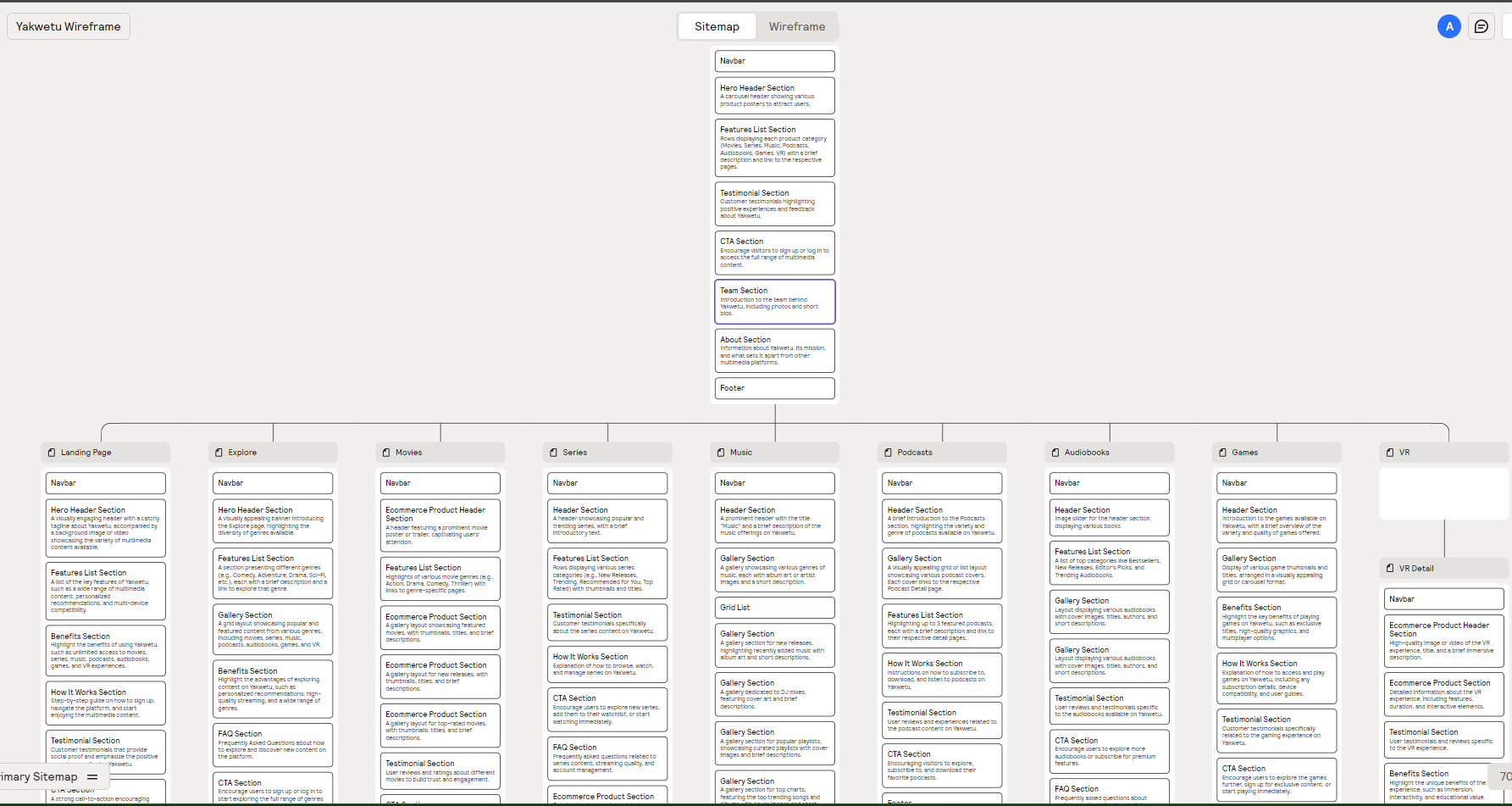
The final architecture prioritized:
Hierarchy: Ensuring users could navigate from broad categories to specific content effortlessly.
Scalability: Designing with future growth in mind to accommodate new content types and features.
Personalization: Integrating a “For You” section powered by AI recommendations to enhance discovery.
By laying a clear foundation with the information architecture, we ensured that every user—whether a film enthusiast or a gamer—could intuitively access their favorite entertainment within seconds.
4️⃣ Prototype: Bringing Ideas to Life
At this point we had divided the project between us and I was handling the music, podcast, audiobooks, explore page and signup page. I did an individual competitive analysis for each product and used those benchmarks to guide my designs. I also drew inspiration form Behance, Dribble, Pinterest, Refero and Stack Sorted.
So I started off with the paper sketches.
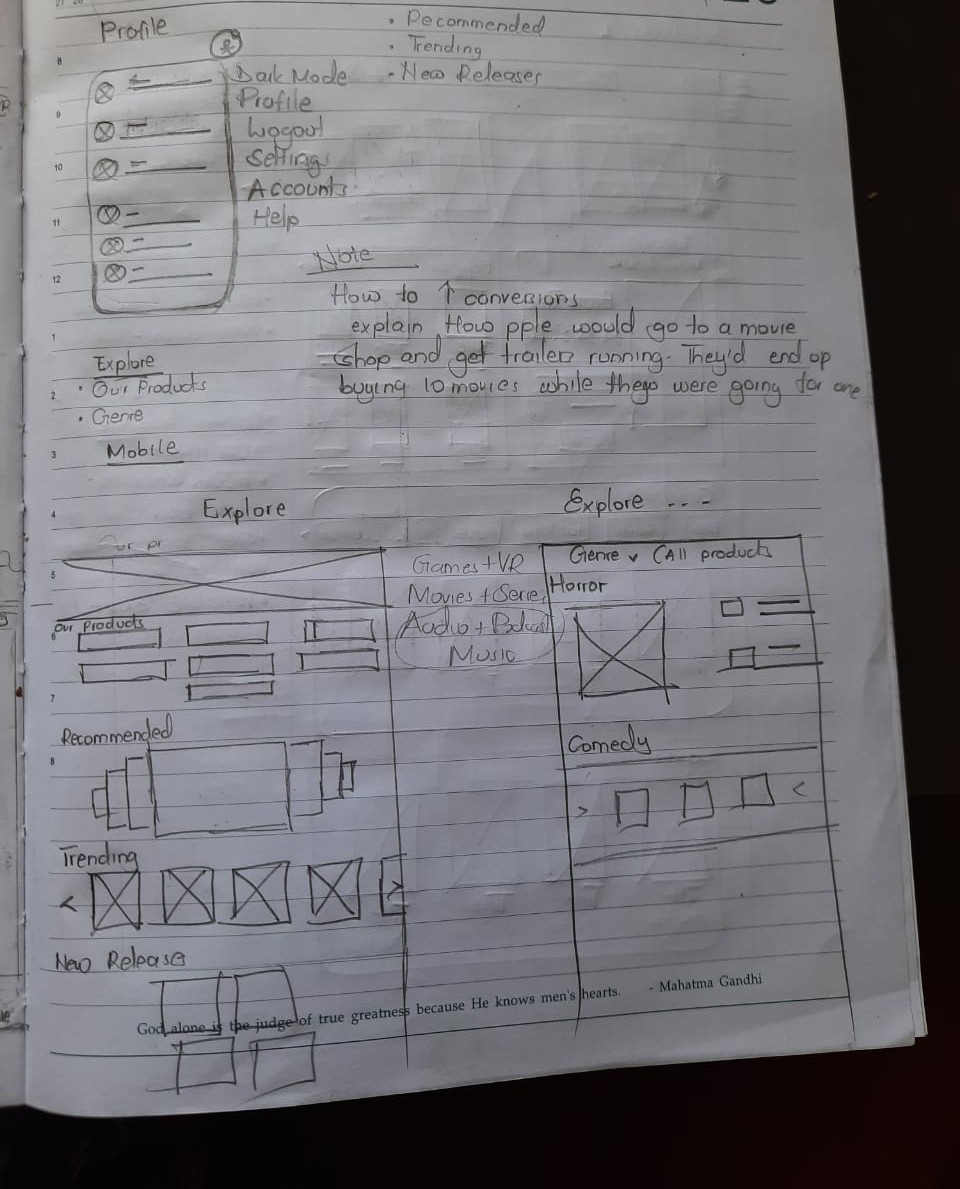
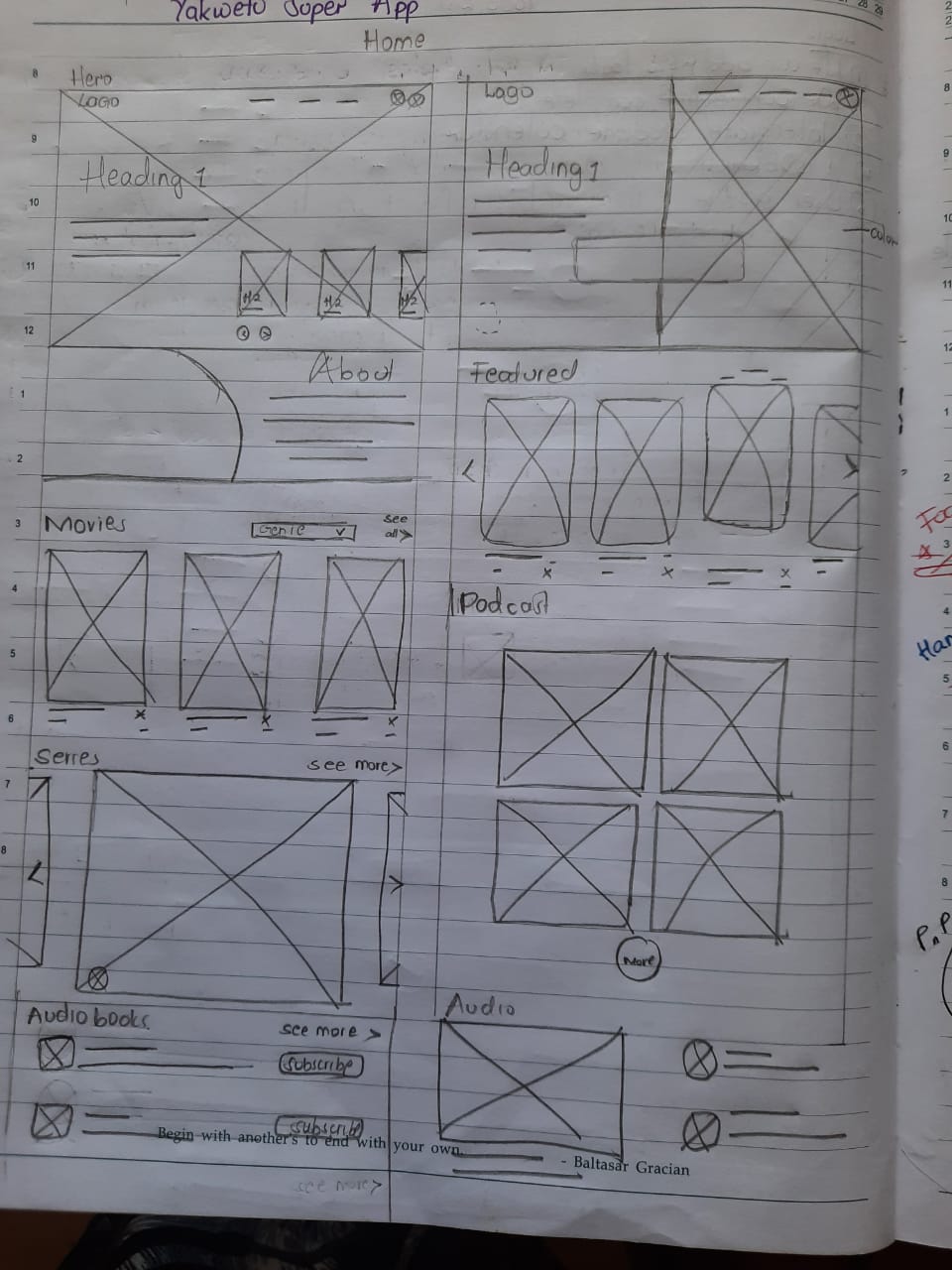
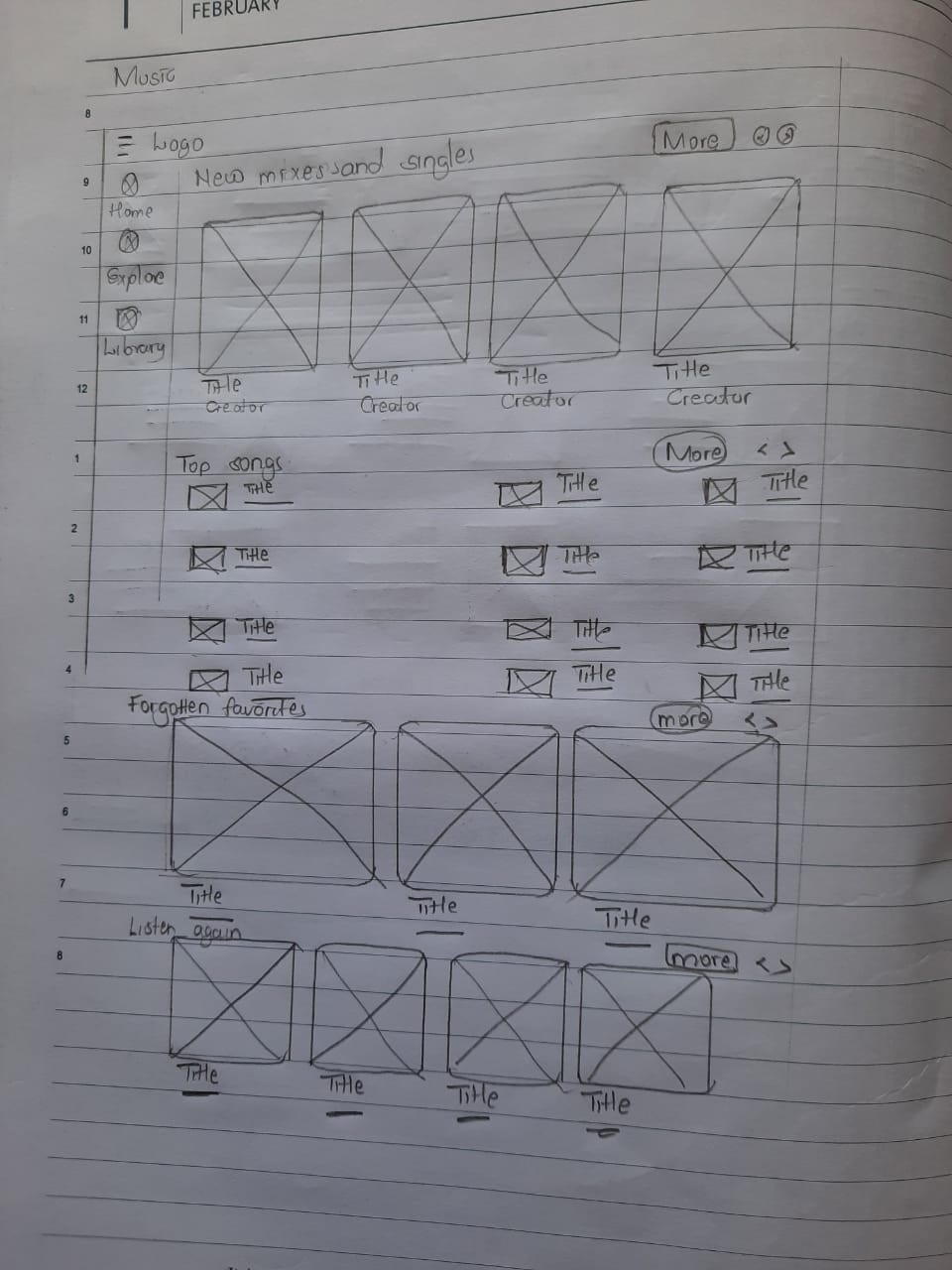
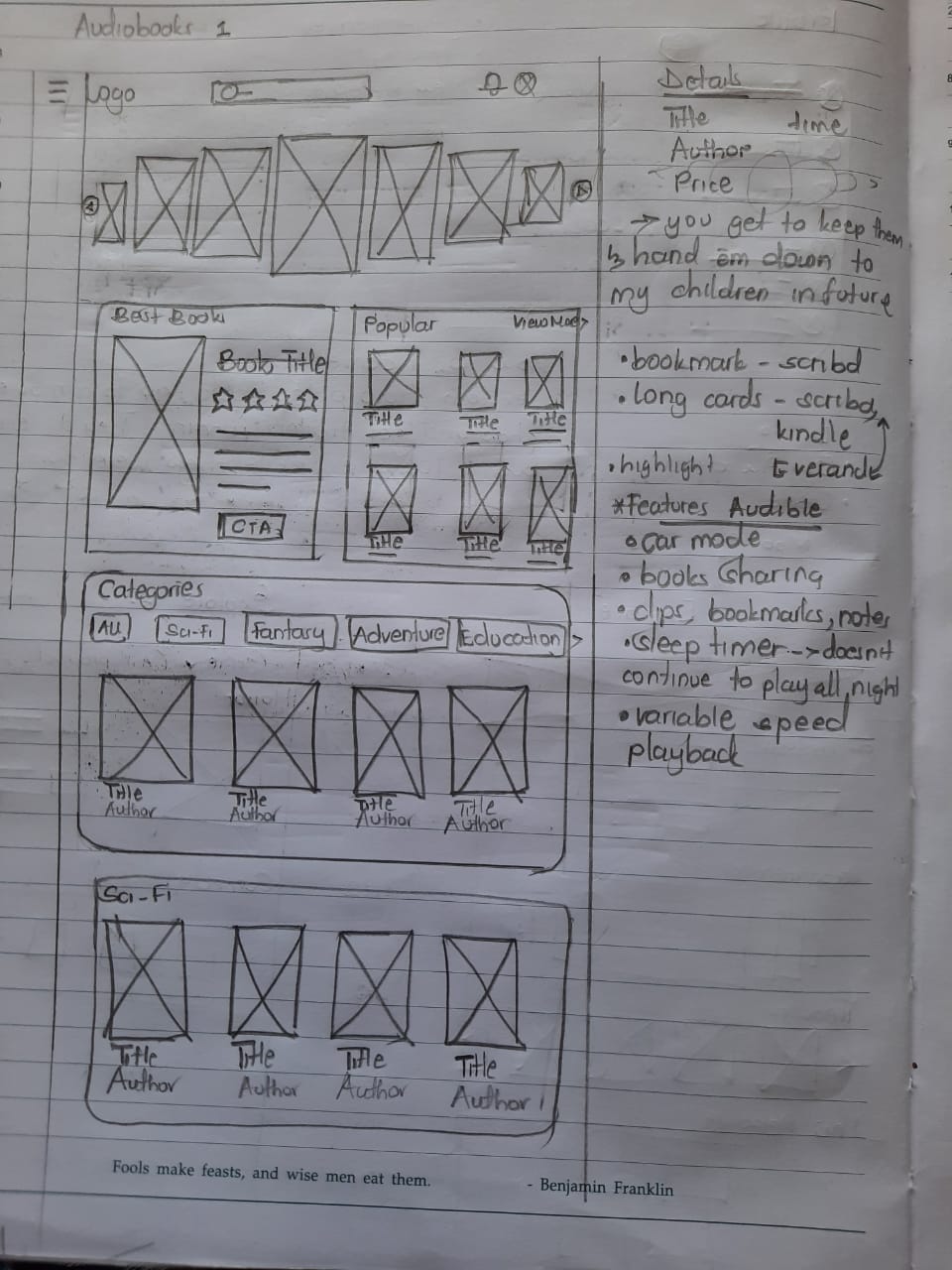
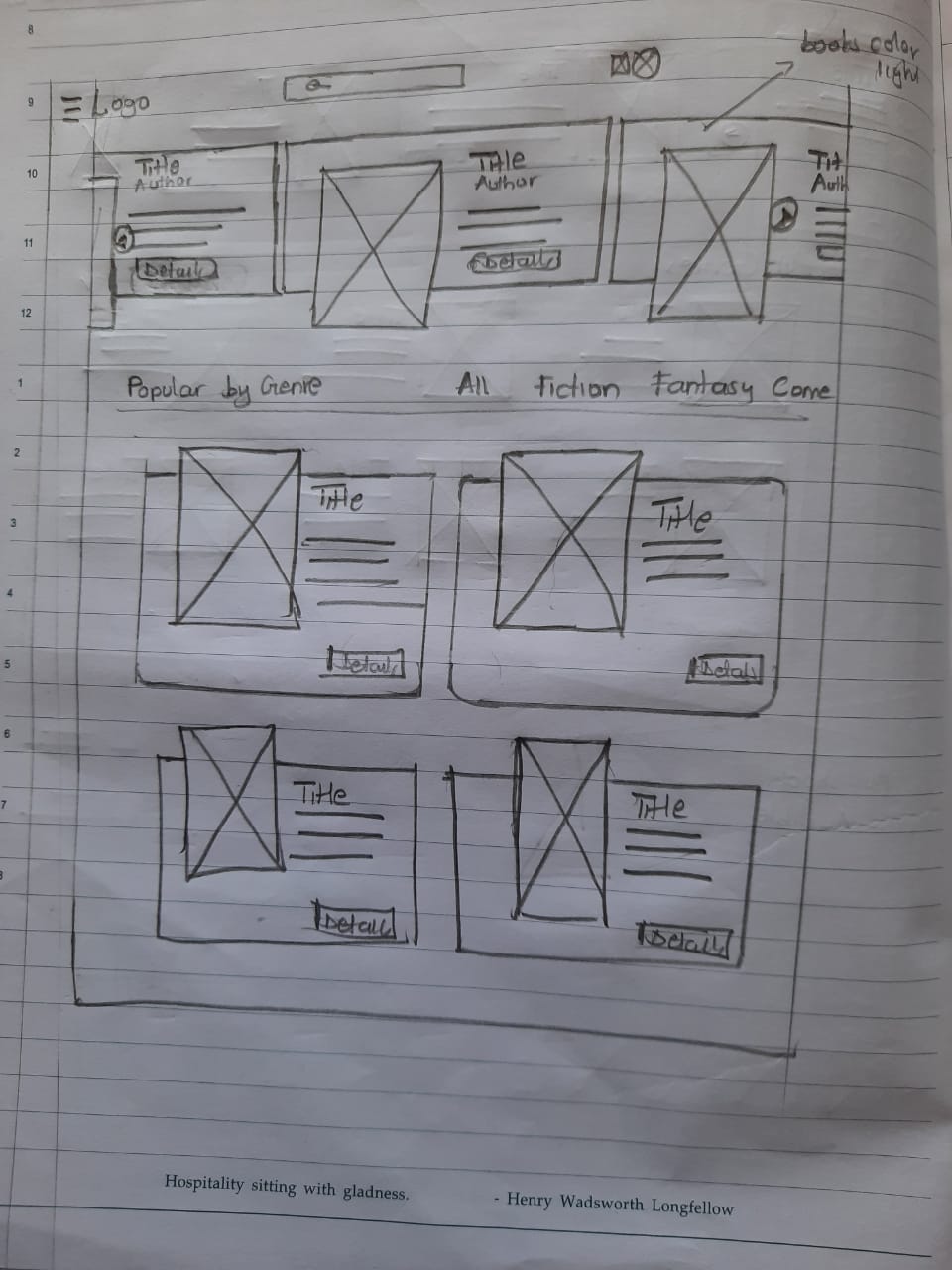
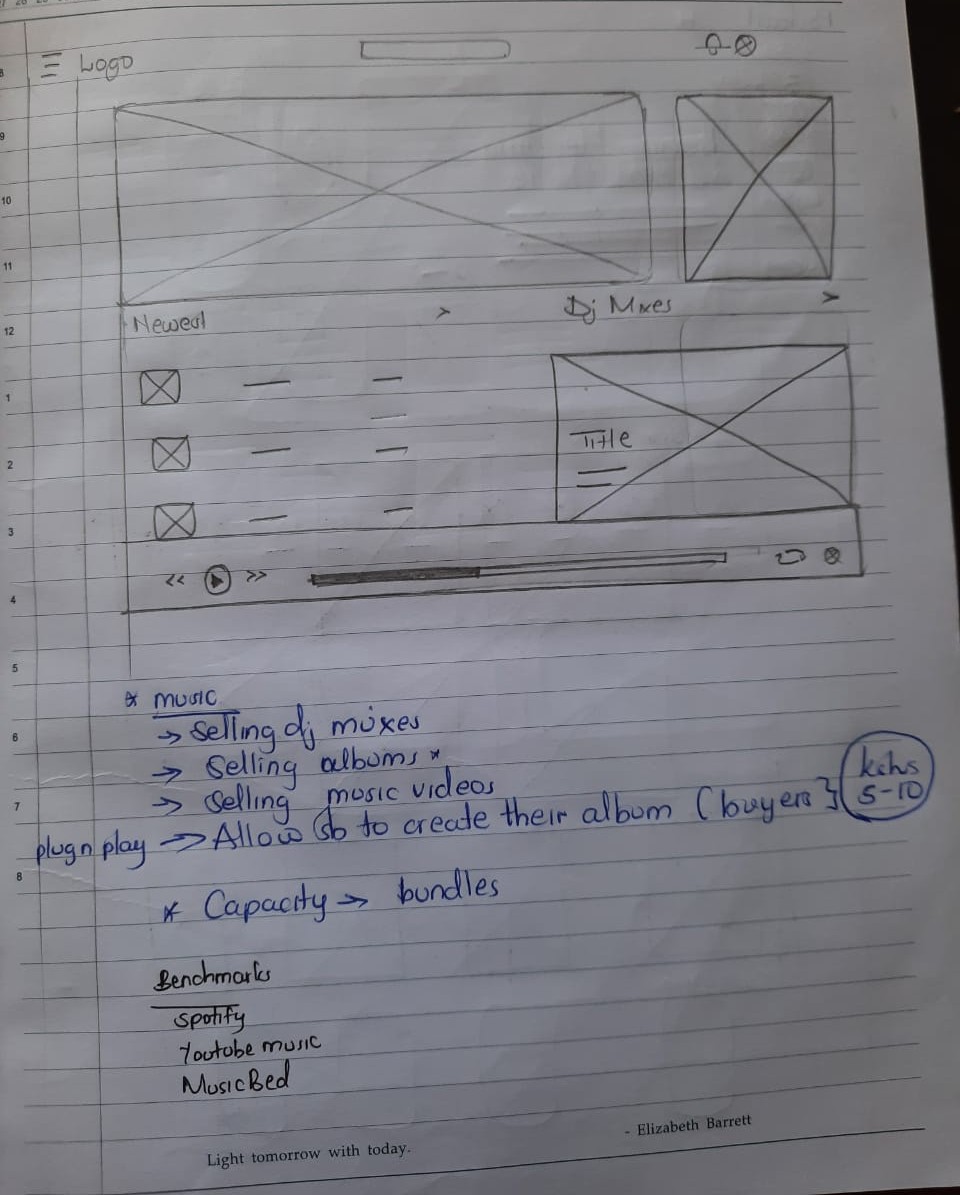
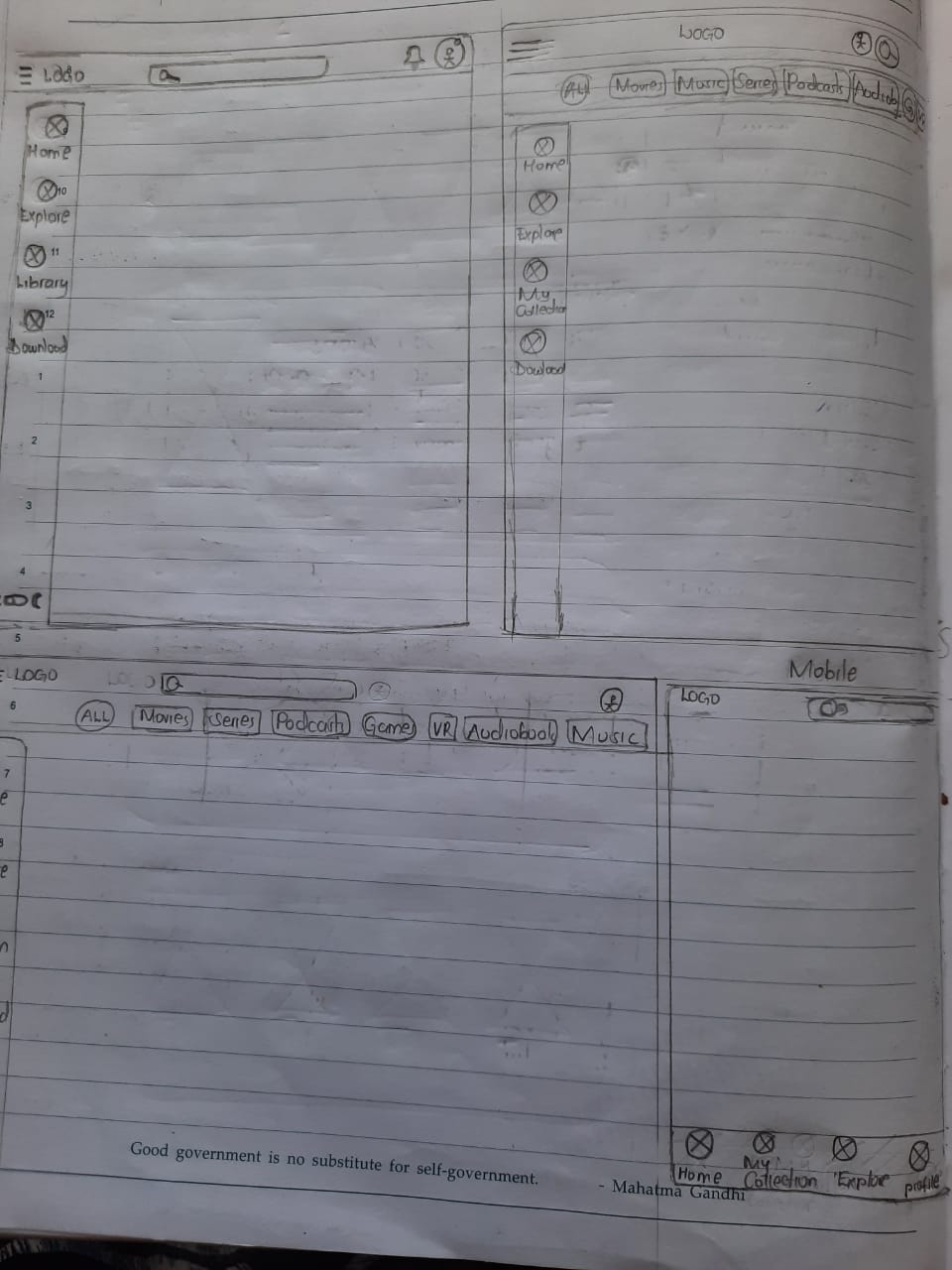
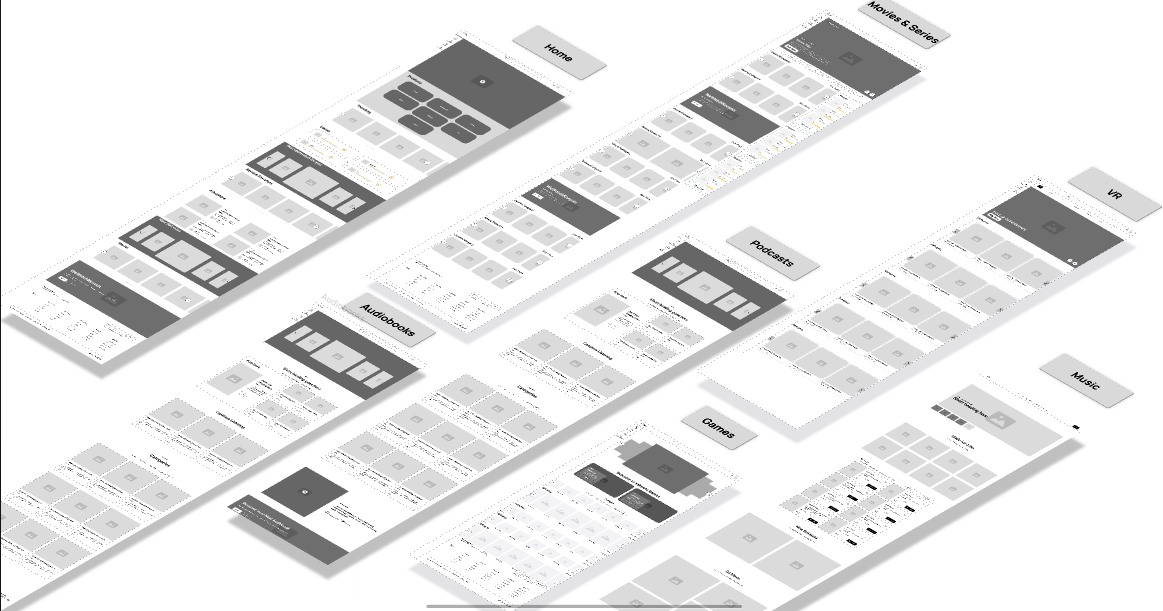
🎨 Low-Fidelity Wireframes: Visualizing the Structure
With a solid foundation established in the Information Architecture, the next step was to bring our ideas to life through Low-Fidelity Wireframes. The goal at this stage was to quickly translate concepts into tangible designs while maintaining consistency across all seven products within the Yakwetu Super App.
To achieve this, I utilized Relume's Design System, which provided a standardized framework for sitemaps and wireframes. This approach not only accelerated the design process but also ensured a clean, modular structure that aligned with our app's scalability needs.
Some of the key screens I developed at this stage included:
Explore Page: A dynamic hub to unify and showcase content across categories (movies, podcasts, music, etc.).
Content Interfaces: Wireframes for podcast, music, and audiobook pages, focusing on functionality and ease of use.
Signup Flow: Streamlined user onboarding to encourage conversions and reduce drop-offs.
The low-fidelity wireframes allowed us to:
Visualize User Flows: Map out how users would interact with different content sections.
Test Layouts Quickly: Iterate rapidly on page structures and navigation without overcommitting to visuals.
Ensure Alignment: Maintain consistency across all products, thanks to the standardized components in Relume.
These wireframes served as the blueprint for the app’s design, paving the way for a seamless transition into high-fidelity prototypes in Figma.
🎨 High-Fidelity Design: Overcoming Design Blocks and Bringing Ideas to Life
Transitioning into the High-Fidelity Design phase presented a unique challenge: the sheer scale of designing seven products for the Yakwetu Super App felt overwhelming at first. I found myself staring at a blank screen for a day, grappling with where to begin. To overcome this creative block, I decided to break the project into smaller, manageable pieces, focusing on one product at a time. This incremental approach helped reduce the pressure and allowed me to maintain clarity and focus throughout the process.To create a productive and relaxed design flow, I curated music playlists that eased tension and set the tone for creative exploration—making the process both enjoyable and fluid.

Me in my creative flow.
I started with the Audiobooks section as the first product:
I designed reusable components for cards and sections, ensuring consistency and modularity across the app.
I drew inspiration from benchmark platforms like Audible, Scribd, Everand, Downpour, Blinkist, Kobo, and Apple Books. These references helped me identify best practices in content presentation, playback interfaces, and browsing experiences.

Audiobook Main Page and Detail View Page

Next, I moved on to the Podcasts section:
Platforms such as Spotify, Apple Podcasts, and YouTube served as benchmarks for playback designs, categorization, and user navigation.
I expanded my exploration to Behance, Pinterest, and Dribbble to gather creative ideas and inspiration for unique interface elements.
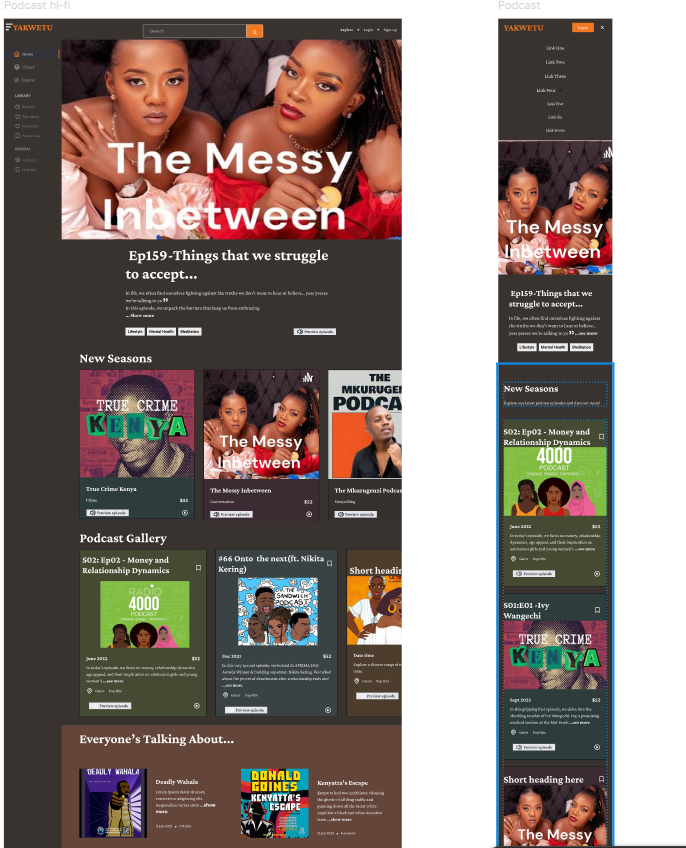
Podcasts Main Page and Detail View Page

For the Music section:
I referenced YouTube Music, Spotify, and YouTube to design intuitive playback controls, search functionality, and user-friendly layouts that encourage content discovery.

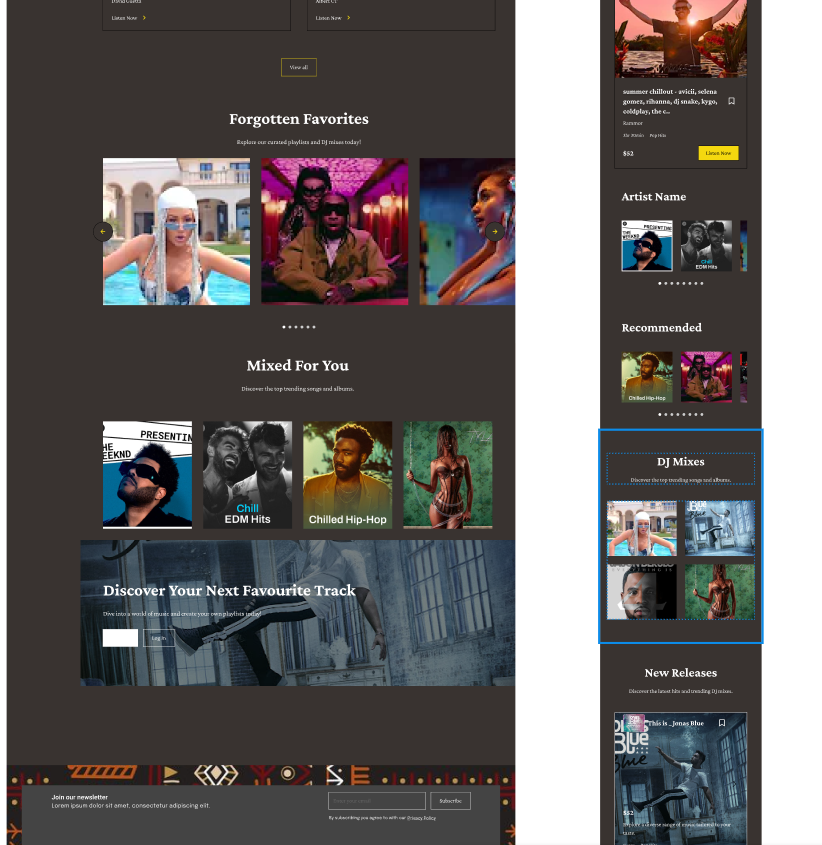
Music Main Page and Detail View Page
⚡ Challenges & Takeaways
- Scale: Designing seven products felt overwhelming at times.
- AI Tools: While inspiring, AI-generated wireframes weren’t practical for Figma.
- Balancing Aesthetics & Usability: Ensuring the app was both beautiful and functional required constant iteration.
✨ Reflections
The Yakwetu Super App wasn’t just a design project—it was a mission to uplift African creators and audiences. This case study reminds me of the power of collaboration, creativity, and user-centered design to make a real impact. My key takeaways are:
💡 Break big projects into smaller tasks.
💡 Communicate effectively with stakeholders.
💡 Stay user-focused even when juggling multiple priorities.
Next up? Launching the app and seeing it thrive! 🚀

🚀The End!... Or is it?